 0969-435-240
 info@ieltslab.edu.vn
 Liên hệ ngay
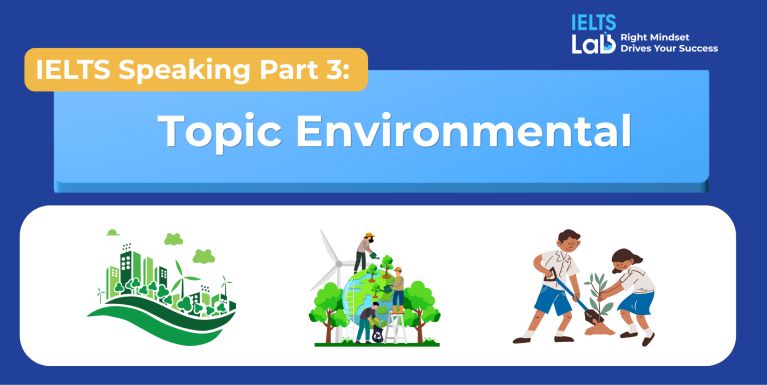
Environmental Protection (Bảo vệ môi trường) là một chủ đề trong IELTS Speaking Part 3, với các câu hỏi liên quan đến ô nhiễm, trách nhiệm bảo vệ thiên nhiên, giáo dục môi trường và vai trò của pháp luật.
Cùng IELTS Lab tham khảo 6 bài mẫu IELTS Speaking Part 3 chủ đề Environmental Protection và những từ vựng hữu ích giúp bạn phát triển lập luận, đưa ra ví dụ và trả lời mạch lạc hơn nhé!
1. Danh sách câu hỏi IELTS Speaking Part 3 – Environmental Protection
|
2. Bài mẫu IELTS Speaking Part 3 – Topic Environmental Protection
Question 1: Why is environmental protection important?
Sample Answer (Band 8.0+ tham khảo):
| Bài mẫu |
|---|
| Well, environmental protection is important because the environment directly affects people’s health and quality of life. If the air is polluted, the water is dirty, or the weather becomes more extreme, ordinary people suffer in very practical ways. For example, in big cities, poor air quality can make children, elderly people, and office workers feel tired, sick, or uncomfortable more often. Another reason is that protecting the environment also means protecting future generations. If people use resources carelessly now, their children may have to deal with more floods, heatwaves, and shortages of clean water later. To me, environmental protection is not just a nice idea; it is a basic responsibility for long-term survival. |
Từ vựng nổi bật:
| Từ vựng | Ý nghĩa |
|---|---|
| environmental protection | Bảo vệ môi trường |
| health and quality of life | Sức khỏe và chất lượng cuộc sống |
| air pollution | Ô nhiễm không khí |
| extreme weather | Thời tiết cực đoan |
| poor air quality | Chất lượng không khí kém |
| future generations | Các thế hệ tương lai |
| use resources carelessly | Sử dụng tài nguyên thiếu trách nhiệm |
| floods | Lũ lụt |
| heatwaves | Những đợt nắng nóng |
| shortages of clean water | Tình trạng thiếu nước sạch |
| long-term survival | Sự tồn tại lâu dài |
Question 2: What environmental problems are common in cities?
Sample Answer (Band 8.0+ tham khảo):
| Bài mẫu |
|---|
| In my opinion, air pollution is one of the most common environmental problems in cities. Heavy traffic, construction sites, and factories can create dusty, polluted, and uncomfortable living conditions. For example, people in large Vietnamese cities often have to wear masks when traveling on busy roads. Another major problem is waste. Cities produce huge amounts of plastic bags, food packaging, and household rubbish every day, and not all of it is properly collected or recycled. Taken together, traffic emissions and poor waste management make urban life less healthy and less pleasant. |
Từ vựng nổi bật:
| Từ vựng | Ý nghĩa |
|---|---|
| air pollution | Ô nhiễm không khí |
| heavy traffic | Giao thông đông đúc |
| construction sites | Công trường xây dựng |
| dusty | Nhiều bụi |
| polluted | Bị ô nhiễm |
| living conditions | Điều kiện sống |
| wear masks | Đeo khẩu trang |
| household rubbish | Rác thải sinh hoạt |
| food packaging | Bao bì thực phẩm |
| properly collected or recycled | Được thu gom hoặc tái chế đúng cách |
| traffic emissions | Khí thải giao thông |
| waste management | Quản lý rác thải |
Question 3: Should governments or individuals take more responsibility?
Sample Answer (Band 8.0+ tham khảo):
| Bài mẫu |
|---|
| From my perspective, governments should take more responsibility because they have the power to make laws, collect taxes, and control large industries. For example, only the government can set strict rules on factory emissions, public transport, and waste treatment systems. Without strong policies, individual actions may be too small to create large-scale change. However, individuals also need to do their part in daily life. If people keep littering, wasting electricity, or using plastic unnecessarily, even good policies will not work well. I think governments should lead the process, while ordinary citizens should support it through eco-friendly habits. |
Từ vựng nổi bật:
| Từ vựng | Ý nghĩa |
|---|---|
| take responsibility | Chịu trách nhiệm |
| make laws | Ban hành luật |
| collect taxes | Thu thuế |
| control large industries | Kiểm soát các ngành công nghiệp lớn |
| factory emissions | Khí thải từ nhà máy |
| public transport | Giao thông công cộng |
| waste treatment systems | Hệ thống xử lý chất thải |
| strong policies | Chính sách mạnh mẽ |
| large-scale change | Thay đổi trên quy mô lớn |
| do one’s part | Đóng góp phần trách nhiệm của mình |
| littering | Xả rác bừa bãi |
| eco-friendly habits | Thói quen thân thiện với môi trường |
Question 4: How can schools teach children about environmental protection?
Sample Answer (Band 8.0+ tham khảo):
| Bài mẫu |
|---|
| Well, schools can teach children about environmental protection by making the topic practical, not just theoretical. Instead of only asking students to memorise facts, teachers can organise recycling projects, tree-planting days, or classroom discussions about saving energy. For example, children may understand plastic pollution better if they collect rubbish around their school and see how much waste is produced. Schools can also help children develop responsible habits from a young age. Simple actions like turning off lights, bringing reusable bottles, and keeping classrooms clean can make environmental protection feel normal. This kind of education works well because it turns a big issue into small daily actions. |
Từ vựng nổi bật:
| Từ vựng | Ý nghĩa |
|---|---|
| practical | Mang tính thực tiễn |
| theoretical | Mang tính lý thuyết |
| memorise facts | Ghi nhớ kiến thức |
| recycling projects | Dự án tái chế |
| tree-planting days | Ngày hội trồng cây |
| save energy | Tiết kiệm năng lượng |
| plastic pollution | Ô nhiễm rác thải nhựa |
| develop responsible habits | Hình thành thói quen có trách nhiệm |
| from a young age | Từ khi còn nhỏ |
| reusable bottles | Bình nước có thể tái sử dụng |
| small daily actions | Những hành động nhỏ hằng ngày |
Question 5: Do you think environmental laws are effective?
Sample Answer (Band 8.0+ tham khảo):
| Bài mẫu |
|---|
| In my opinion, environmental laws can be effective, but only if they are properly enforced. A law may look good on paper, but if companies can ignore it without serious consequences, it will not make much difference. For example, factories may continue polluting rivers if inspections are weak or fines are too small. However, strong laws can create real pressure for businesses and individuals to change. If pollution is monitored closely and penalties are high enough, people are more likely to follow the rules. Environmental laws matter, but enforcement is what turns them from empty promises into real protection. |
Từ vựng nổi bật:
| Từ vựng | Ý nghĩa |
|---|---|
| environmental laws | Luật bảo vệ môi trường |
| effective | Có hiệu quả |
| enforce laws | Thực thi pháp luật |
| on paper | Trên lý thuyết, trên giấy tờ |
| serious consequences | Hậu quả nghiêm trọng |
| make a difference | Tạo ra sự khác biệt |
| pollute rivers | Gây ô nhiễm sông ngòi |
| inspections | Các cuộc thanh tra, kiểm tra |
| fines | Các khoản tiền phạt |
| monitor closely | Giám sát chặt chẽ |
| penalties | Các hình phạt |
| follow the rules | Tuân thủ quy định |
| empty promises | Những lời hứa suông |
Question 6: Should companies be punished for pollution?
Sample Answer (Band 8.0+ tham khảo):
| Bài mẫu |
|---|
| Absolutely, companies should be punished if they cause pollution because their actions can harm many people. When a company dumps waste into a river or releases toxic smoke into the air, local communities may suffer from health problems, bad smells, and damaged livelihoods. For example, fishermen or farmers can lose income if water sources become contaminated. At the same time, punishment should be fair and strong enough to encourage real change. Besides paying fines, companies may need to clean up the damage and invest in cleaner technology. For me, this is not about revenge; it is about making businesses accountable for the damage they cause. |
Từ vựng nổi bật:
| Từ vựng | Ý nghĩa |
|---|---|
| be punished for pollution | Bị xử phạt vì gây ô nhiễm |
| cause pollution | Gây ô nhiễm |
| dump waste | Xả chất thải |
| toxic smoke | Khói độc |
| local communities | Cộng đồng địa phương |
| health problems | Các vấn đề sức khỏe |
| damaged livelihoods | Sinh kế bị ảnh hưởng |
| lose income | Mất thu nhập |
| contaminated | Bị nhiễm bẩn, ô nhiễm |
| pay fines | Nộp tiền phạt |
| clean up the damage | Khắc phục thiệt hại |
| cleaner technology | Công nghệ sạch hơn |
| hold businesses accountable | Yêu cầu doanh nghiệp chịu trách nhiệm |
3. Mẹo trả lời IELTS Speaking Part 3 chủ đề Environmental Protection
- Phát triển lập luận theo nguyên nhân – hậu quả: Ví dụ, ô nhiễm không khí ảnh hưởng đến sức khỏe, trong khi sử dụng tài nguyên thiếu kiểm soát có thể gây ra những vấn đề lâu dài.
- Đưa ra ví dụ thực tế: Liên hệ với giao thông đông đúc, rác thải nhựa, ô nhiễm sông ngòi hoặc hoạt động bảo vệ môi trường tại trường học.
- Thể hiện quan điểm cân bằng: Khi nói về trách nhiệm môi trường, có thể phân tích vai trò của cả chính phủ, doanh nghiệp và cá nhân.
- Sử dụng từ vựng theo cụm: Ưu tiên các collocations như take responsibility, factory emissions, waste management, enforce laws, eco-friendly habits và hold businesses accountable.
4. Lời kết
Chủ đề Environmental Protection giúp thí sinh IELTS Speaking Part 3 luyện cách phân tích những vấn đề xã hội, giải thích nguyên nhân – hậu quả và đề xuất giải pháp cho các thách thức về môi trường.
Hy vọng 6 bài mẫu IELTS Speaking Part 3 trên sẽ giúp bạn mở rộng vốn từ, phát triển khả năng lập luận và trả lời tự tin hơn trong kỳ thi IELTS.
Đừng quên theo dõi IELTS Lab để cập nhật thêm các bài mẫu IELTS Speaking theo chủ đề và phương pháp luyện thi hiệu quả nhé!












Để lại một bình luận
Bạn phải đăng nhập để gửi bình luận.