 0969-435-240
 info@ieltslab.edu.vn

 Liên hệ ngay
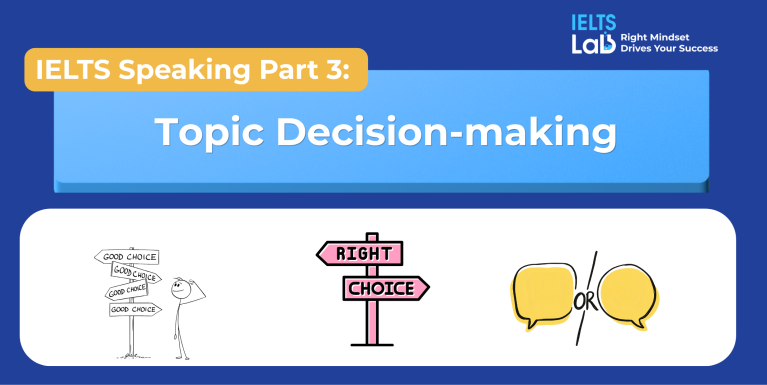
Decision-making (Ra quyết định) là một chủ đề trong IELTS Speaking Part 3, với các câu hỏi liên quan đến cách con người đưa ra lựa chọn, những yếu tố ảnh hưởng đến quyết định và vai trò của kinh nghiệm, công nghệ hay lời khuyên từ người khác.
Cùng IELTS Lab tham khảo 6 bài mẫu IELTS Speaking Part 3 chủ đề Decision-making và những từ vựng hữu ích giúp bạn phát triển lập luận, đưa ra ví dụ và trả lời mạch lạc hơn nhé!
1. Danh sách câu hỏi IELTS Speaking Part 3 – Decision-making
|
2. Bài mẫu IELTS Speaking Part 3 – Topic Decision-making
Question 1: What kinds of decisions do young people usually make?
Sample Answer (Band 8.0+ tham khảo):
| Bài mẫu |
|---|
| Well, young people usually make decisions related to education, friendships, and their future career. They may have to choose a major, decide which university to apply to, or think about whether they should study abroad. For example, a Vietnamese student may need to choose between staying close to family and moving to another city for better opportunities. Young people also make many social and lifestyle decisions. They decide who to spend time with, what hobbies to follow, and how much time to spend online. These choices may seem small at first, but they can gradually shape their personal growth and future direction. |
Từ vựng nổi bật:
| Từ vựng | Ý nghĩa |
|---|---|
| make decisions | Đưa ra quyết định |
| future career | Sự nghiệp tương lai |
| choose a major | Chọn chuyên ngành |
| apply to a university | Nộp đơn vào đại học |
| study abroad | Du học |
| better opportunities | Những cơ hội tốt hơn |
| social and lifestyle decisions | Những quyết định về xã hội và lối sống |
| personal growth | Sự phát triển cá nhân |
| future direction | Định hướng tương lai |
Question 2: Why do some people find decision-making difficult?
Sample Answer (Band 8.0+ tham khảo):
| Bài mẫu |
|---|
| To be honest, some people find decision-making difficult because they are afraid of making the wrong choice. When a decision involves money, career, or relationships, people may worry that one mistake will lead to serious consequences. For example, choosing the wrong university major can feel scary because it may affect future job opportunities. Another reason is that people may have too many options. When there are too many courses, products, or travel destinations to choose from, the whole process can become overwhelming. I think decision-making becomes hardest when people face both pressure and uncertainty. |
Từ vựng nổi bật:
| Từ vựng | Ý nghĩa |
|---|---|
| decision-making | Quá trình ra quyết định |
| make the wrong choice | Đưa ra lựa chọn sai lầm |
| serious consequences | Hậu quả nghiêm trọng |
| future job opportunities | Cơ hội việc làm trong tương lai |
| too many options | Quá nhiều lựa chọn |
| overwhelming | Gây choáng ngợp |
| pressure | Áp lực |
| uncertainty | Sự không chắc chắn |
Question 3: Do men and women make decisions differently?
Sample Answer (Band 8.0+ tham khảo):
| Bài mẫu |
|---|
| Well, I think men and women may sometimes make decisions differently, but the difference is not always about gender itself. It may come from upbringing, personality, social expectations, or the kind of situation they are dealing with. For example, some women may be encouraged to consider family needs carefully, while some men may be expected to make quick and confident choices. However, these are only general patterns, not fixed rules. Many women are very decisive, and many men prefer to think things through before acting. I would say decision-making style depends more on experience and personality than simply being male or female. |
Từ vựng nổi bật:
| Từ vựng | Ý nghĩa |
|---|---|
| gender | Giới tính |
| upbringing | Cách nuôi dạy, giáo dục từ nhỏ |
| personality | Tính cách |
| social expectations | Những kỳ vọng của xã hội |
| consider family needs | Cân nhắc nhu cầu của gia đình |
| quick and confident choices | Những lựa chọn nhanh chóng và tự tin |
| decisive | Quyết đoán |
| think things through | Suy nghĩ kỹ lưỡng trước khi quyết định |
| fixed rules | Những quy tắc cố định |
| decision-making style | Phong cách ra quyết định |
Question 4: Is it better to make decisions alone or ask for advice?
Sample Answer (Band 8.0+ tham khảo):
| Bài mẫu |
|---|
| In my opinion, it depends on the decision, but asking for advice is often helpful when the choice is important. Other people may have experience, information, or a different perspective that helps us see the bigger picture. For example, a student choosing a university major may benefit from talking to teachers, parents, and older students. However, people should not let others decide everything for them. At the end of the day, they are the ones who have to live with the result, so they need to take personal responsibility. The best approach, I think, is to listen carefully, then make the final decision based on one’s own values and situation. |
Từ vựng nổi bật:
| Từ vựng | Ý nghĩa |
|---|---|
| ask for advice | Xin lời khuyên |
| a different perspective | Một góc nhìn khác |
| see the bigger picture | Nhìn nhận vấn đề một cách toàn diện |
| benefit from | Hưởng lợi từ |
| live with the result | Chấp nhận, sống với kết quả |
| take personal responsibility | Chịu trách nhiệm cá nhân |
| the best approach | Cách tiếp cận tốt nhất |
| make the final decision | Đưa ra quyết định cuối cùng |
| personal values | Những giá trị cá nhân |
Question 5: Can technology help people make decisions?
Sample Answer (Band 8.0+ tham khảo):
| Bài mẫu |
|---|
| Yes, technology can help people make decisions because it gives them quick access to information. People can compare prices, read reviews, check maps, use budgeting apps, or search for expert advice before making a choice. For example, before buying a phone, many people watch review videos and compare features online. However, technology can also make decision-making harder if people depend on it too much. Too many reviews, comments, and recommendations can create confusion or make people second-guess themselves. Technology is useful as a tool, but people still need their own judgement and critical thinking. |
Từ vựng nổi bật:
| Từ vựng | Ý nghĩa |
|---|---|
| quick access to information | Khả năng tiếp cận thông tin nhanh chóng |
| compare prices | So sánh giá cả |
| read reviews | Đọc các bài đánh giá |
| check maps | Xem bản đồ |
| budgeting apps | Ứng dụng quản lý ngân sách |
| expert advice | Lời khuyên từ chuyên gia |
| compare features | So sánh các tính năng |
| depend on something too much | Phụ thuộc quá nhiều vào điều gì |
| second-guess oneself | Nghi ngờ quyết định của chính mình |
| judgement | Khả năng phán đoán |
| critical thinking | Tư duy phản biện |
Question 6: How can experience improve decision-making?
Sample Answer (Band 8.0+ tham khảo):
| Bài mẫu |
|---|
| Well, experience improves decision-making because it teaches people what works and what does not. After making mistakes, people usually become better at noticing risks, asking the right questions, and avoiding unrealistic expectations. For example, someone who has changed jobs before may know how to check a company’s culture before accepting an offer. Experience also helps people stay calmer when they face difficult choices. Instead of panicking, they can compare the current situation with something they have dealt with before. That kind of practical knowledge gives people both better judgement and better emotional control. |
Từ vựng nổi bật:
| Từ vựng | Ý nghĩa |
|---|---|
| learn from experience | Học hỏi từ kinh nghiệm |
| learn from mistakes | Rút kinh nghiệm từ sai lầm |
| notice risks | Nhận biết rủi ro |
| ask the right questions | Đặt những câu hỏi phù hợp |
| unrealistic expectations | Những kỳ vọng thiếu thực tế |
| company culture | Văn hóa doanh nghiệp |
| accept an offer | Chấp nhận một lời đề nghị |
| stay calm | Giữ bình tĩnh |
| deal with difficult choices | Đối mặt với những lựa chọn khó khăn |
| practical knowledge | Kiến thức thực tiễn |
| better judgement | Khả năng phán đoán tốt hơn |
| emotional control | Khả năng kiểm soát cảm xúc |
3. Mẹo trả lời IELTS Speaking Part 3 chủ đề Decision-making
- Trình bày quan điểm rõ ràng: Với câu hỏi về việc đưa ra quyết định, hãy thể hiện ý kiến ngay từ đầu bằng các cấu trúc như In my opinion, To be honest, I think it depends on…
- Phân tích nguyên nhân và hậu quả: Giải thích tại sao con người gặp khó khăn khi lựa chọn hoặc những yếu tố nào ảnh hưởng đến quyết định.
- Đưa ra ví dụ thực tế: Liên hệ với việc chọn trường đại học, định hướng nghề nghiệp, mua sắm hoặc thay đổi công việc.
- Thể hiện góc nhìn cân bằng: Ví dụ, lời khuyên và công nghệ có thể hỗ trợ quá trình ra quyết định, nhưng mỗi người vẫn cần tự chịu trách nhiệm về lựa chọn của mình.
- Sử dụng collocations tự nhiên: Ưu tiên các cụm như make the wrong choice, think things through, see the bigger picture, take personal responsibility và critical thinking.
4. Lời kết
Chủ đề Decision-making giúp thí sinh IELTS Speaking Part 3 luyện cách trình bày quan điểm, so sánh các lựa chọn và phân tích những yếu tố ảnh hưởng đến hành vi của con người.
Hy vọng 6 bài mẫu IELTS Speaking Part 3 trên sẽ giúp bạn mở rộng vốn từ, phát triển khả năng lập luận và trả lời tự tin hơn trong kỳ thi IELTS.
Đừng quên theo dõi IELTS Lab để cập nhật thêm các bài mẫu IELTS Speaking theo chủ đề và phương pháp luyện thi hiệu quả nhé!












Để lại một bình luận
Bạn phải đăng nhập để gửi bình luận.