 0969-435-240
 info@ieltslab.edu.vn

 Liên hệ ngay
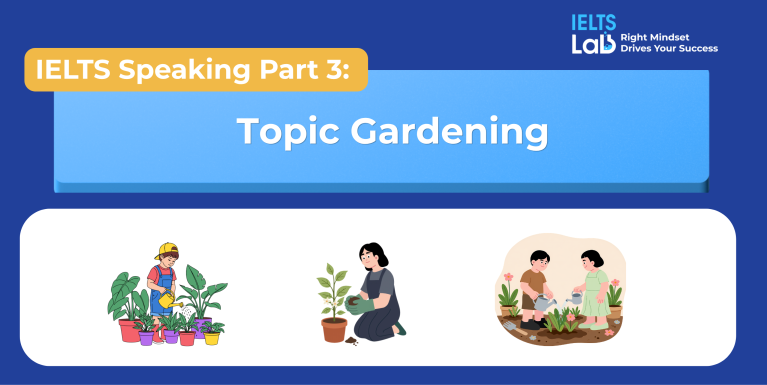
Gardening (Làm vườn và trồng cây) là một chủ đề trong IELTS Speaking Part 3, với các câu hỏi xoay quanh sở thích trồng cây, lợi ích của việc làm vườn đối với sức khỏe tinh thần, vai trò của giáo dục thiên nhiên và những kỹ năng cần thiết khi chăm sóc cây trồng.
Cùng IELTS Lab tham khảo 10 bài mẫu Speaking Part 3 Band 8.0+ và những từ vựng hữu ích để phát triển câu trả lời tự nhiên, mạch lạc hơn nhé!
1. Danh sách câu hỏi IELTS Speaking Part 3 – Gardening
Dưới đây là 10 câu hỏi thuộc chủ đề Gardening để bạn luyện tập:
|
2. Bài mẫu IELTS Speaking Part 3 – Topic Gardening
Question 1: Why do some people enjoy gardening?
Sample Answer (Band 8.0+ tham khảo):
| Bài mẫu |
|---|
| Well, some people enjoy gardening because it helps them relax and escape from daily stress. Taking care of plants, watering them, and watching them grow can give people a sense of peace. For many people who work on computers all day, gardening is a nice way to do something slow and natural. Another reason is that gardening gives people a feeling of achievement. When a plant grows flowers, fruits, or fresh leaves, people can clearly see the result of their effort. |
Từ vựng nổi bật:
| Từ vựng | Ý nghĩa |
|---|---|
| enjoy gardening | Yêu thích việc làm vườn |
| relax and escape from daily stress | Thư giãn và thoát khỏi căng thẳng hằng ngày |
| take care of plants | Chăm sóc cây cối |
| water plants | Tưới cây |
| a sense of peace | Cảm giác bình yên |
| a feeling of achievement | Cảm giác đạt được thành tựu |
| the result of one’s effort | Thành quả từ sự nỗ lực |
Question 2: Do you think growing plants is popular among young people?
Sample Answer (Band 8.0+ tham khảo):
| Bài mẫu |
|---|
| To be honest, I think it is becoming more popular among young people, especially in cities. Many young people grow small plants, succulents, herbs, or balcony vegetables because they want their rooms to look fresher and more personal. Social media also makes plants look attractive, since people often share photos of cozy rooms with green corners. Another reason is that growing plants can be a simple way to reduce stress. Even if young people are busy, taking care of one or two small plants is not too difficult. So, I’d say gardening is no longer only for older people; it has become part of a healthier lifestyle for some young adults. |
Từ vựng nổi bật:
| Từ vựng | Ý nghĩa |
|---|---|
| become more popular | Trở nên phổ biến hơn |
| succulents | Các loại cây mọng nước |
| herbs | Các loại rau thơm, thảo mộc |
| balcony vegetables | Rau trồng ở ban công |
| cozy rooms | Những căn phòng ấm cúng |
| green corners | Những góc không gian xanh |
| reduce stress | Giảm căng thẳng |
| a healthier lifestyle | Lối sống lành mạnh hơn |
Question 3: What are the benefits of growing plants at home?
Sample Answer (Band 8.0+ tham khảo):
| Bài mẫu |
|---|
| Well, growing plants at home can make the living space more beautiful and comfortable. Green plants can brighten up a room and create a more relaxing atmosphere, especially in apartments or small houses. Some plants can also improve air quality a little, although people should not expect them to solve pollution completely. Another benefit is emotional. Looking after plants teaches patience and gives people something simple to care for every day. All in all, home plants are beneficial because they improve both the space and people’s mood. |
Từ vựng nổi bật:
| Từ vựng | Ý nghĩa |
|---|---|
| living space | Không gian sống |
| beautiful and comfortable | Đẹp và thoải mái |
| brighten up a room | Làm căn phòng trở nên tươi sáng, sinh động hơn |
| a relaxing atmosphere | Bầu không khí thư giãn |
| improve air quality | Cải thiện chất lượng không khí |
| look after plants | Chăm sóc cây cối |
| teach patience | Rèn luyện tính kiên nhẫn |
| improve one’s mood | Cải thiện tâm trạng |
Question 4: Should schools teach children how to grow plants? Why?
Sample Answer (Band 8.0+ tham khảo):
| Bài mẫu |
|---|
| Absolutely, schools should teach children how to grow plants because it helps them understand nature in a practical way. If students plant seeds, water them, and watch them grow, they learn that food and nature require time and care. This is much more memorable than only reading about plants in a textbook. Another benefit is that planting teaches responsibility. If children forget to water a plant, they can see the result directly, which helps them learn from experience. Because of this, I think school gardening is useful because it combines science, responsibility, and environmental awareness. |
Từ vựng nổi bật:
| Từ vựng | Ý nghĩa |
|---|---|
| understand nature in a practical way | Hiểu thiên nhiên thông qua trải nghiệm thực tế |
| plant seeds | Gieo hạt |
| memorable | Dễ ghi nhớ, đáng nhớ |
| teach responsibility | Rèn luyện ý thức trách nhiệm |
| learn from experience | Học hỏi từ trải nghiệm |
| school gardening | Hoạt động làm vườn tại trường |
| environmental awareness | Nhận thức về môi trường |
Question 5: How can plants improve people’s quality of life?
Sample Answer (Band 8.0+ tham khảo):
| Bài mẫu |
|---|
| Well, plants can improve people’s quality of life by making their surroundings more pleasant and peaceful. A home, office, or street with plants usually feels cooler, softer, and less stressful than a place full of concrete. In cities, trees can provide shade, reduce heat, and make public spaces more enjoyable. Another benefit is that plants can support mental health. People may feel calmer when they see greenery, especially after long hours of work or study. Therefore, I think plants improve life by creating a healthier environment and a stronger connection with nature. |
Từ vựng nổi bật:
| Từ vựng | Ý nghĩa |
|---|---|
| quality of life | Chất lượng cuộc sống |
| pleasant and peaceful | Dễ chịu và yên bình |
| surroundings | Môi trường, không gian xung quanh |
| provide shade | Tạo bóng mát |
| reduce heat | Giảm nhiệt |
| support mental health | Hỗ trợ sức khỏe tinh thần |
| greenery | Cây xanh, mảng xanh |
| a healthier environment | Môi trường lành mạnh hơn |
| a stronger connection with nature | Sự gắn kết sâu sắc hơn với thiên nhiên |
Question 6: Is gardening easier now than in the past? Why?
Sample Answer (Band 8.0+ tham khảo):
| Bài mẫu |
|---|
| In my opinion, gardening is easier now in some ways because people have more information and better tools. They can watch online tutorials, buy soil and seeds through shopping apps, and learn how to care for specific plants very quickly. Modern tools like automatic watering systems or ready-made plant pots also make gardening more convenient. However, gardening may be harder in cities because many people live in small apartments with little sunlight or outdoor space. In the past, people often had gardens or yards, especially in rural areas. All in all, I’d say gardening is easier in terms of knowledge, but not always easier in terms of space. |
Từ vựng nổi bật:
| Từ vựng | Ý nghĩa |
|---|---|
| online tutorials | Video hoặc bài hướng dẫn trực tuyến |
| gardening tools | Dụng cụ làm vườn |
| automatic watering systems | Hệ thống tưới cây tự động |
| ready-made plant pots | Chậu trồng cây làm sẵn |
| outdoor space | Không gian ngoài trời |
| rural areas | Khu vực nông thôn |
| in terms of knowledge | Xét về mặt kiến thức |
| in terms of space | Xét về mặt không gian |
Question 7: Do you have a favourite type of plant to grow?
Sample Answer (Band 8.0+ tham khảo):
| Bài mẫu |
|---|
| Well, if I had to choose, I’d say many people would probably enjoy growing herbs or small indoor plants. Herbs like basil, mint, or spring onion are practical because they can be used in cooking and do not require too much space. They also grow fairly quickly, so beginners can feel a sense of progress without waiting for months. Small indoor plants are also popular because they make a desk or bedroom look more lively. Another advantage is that these plants are not too demanding, which suits busy people. |
Từ vựng nổi bật:
| Từ vựng | Ý nghĩa |
|---|---|
| indoor plants | Cây trồng trong nhà |
| basil | Húng quế |
| mint | Bạc hà |
| spring onion | Hành lá |
| practical | Thiết thực, hữu ích |
| grow fairly quickly | Phát triển tương đối nhanh |
| a sense of progress | Cảm giác đang tiến bộ |
| not too demanding | Không đòi hỏi quá nhiều công chăm sóc |
Question 8: What preparations do you need for planting?
Sample Answer (Band 8.0+ tham khảo):
| Bài mẫu |
|---|
| Well, before planting, people need to prepare seeds or young plants, good soil, pots, water, and a suitable place with enough light. Choosing the right plant is important because some plants need strong sunlight, while others can grow indoors. People also need to understand how often to water the plant because too much water can be just as harmful as too little. Another preparation is checking the weather or season, especially for outdoor plants. If people plant at the wrong time, the plant may grow slowly or die quickly. So, I guess good preparation helps people avoid basic mistakes and give plants a better chance to grow. |
Từ vựng nổi bật:
| Từ vựng | Ý nghĩa |
|---|---|
| seeds or young plants | Hạt giống hoặc cây non |
| good soil | Đất trồng tốt |
| a suitable place | Vị trí phù hợp |
| enough light | Đủ ánh sáng |
| strong sunlight | Ánh nắng mạnh |
| grow indoors | Phát triển trong nhà |
| check the weather or season | Kiểm tra thời tiết hoặc mùa vụ |
| avoid basic mistakes | Tránh những sai lầm cơ bản |
| a better chance to grow | Cơ hội phát triển tốt hơn |
Question 9: Do you think planting is easy or difficult?
Sample Answer (Band 8.0+ tham khảo):
| Bài mẫu |
|---|
| To be honest, planting can be easy at the beginning but difficult to do well over time. Putting seeds into soil and watering them is simple, so anyone can start. However, keeping plants healthy requires patience, observation, and some knowledge about sunlight, water, insects, and soil. For example, a plant may look fine one day but become yellow or weak if it receives the wrong care. Another difficulty is that each plant has different needs, so people cannot treat all plants the same way. All in all, I’d say planting is easy to start, but it takes experience to do it properly. |
Từ vựng nổi bật:
| Từ vựng | Ý nghĩa |
|---|---|
| planting | Việc trồng cây |
| put seeds into soil | Gieo hạt vào đất |
| keep plants healthy | Giữ cho cây khỏe mạnh |
| require patience and observation | Đòi hỏi sự kiên nhẫn và quan sát |
| insects | Côn trùng |
| receive the wrong care | Được chăm sóc không đúng cách |
| have different needs | Có những nhu cầu khác nhau |
| do something properly | Làm điều gì đó đúng cách |
Question 10: What do you gain after solving problems in planting?
Sample Answer (Band 8.0+ tham khảo):
| Bài mẫu |
|---|
| Well, after solving problems in planting, people gain patience and practical knowledge. If a plant has yellow leaves or grows slowly, the gardener has to observe, search for causes, and try different solutions. This process teaches people that problems are not always solved immediately. Another thing people gain is confidence. When they manage to save a plant or help it grow better, they feel a real sense of achievement. Because of these benefits, I think gardening problems are useful because they teach people to be patient, careful, and more connected to nature. |
Từ vựng nổi bật:
| Từ vựng | Ý nghĩa |
|---|---|
| patience and practical knowledge | Sự kiên nhẫn và kiến thức thực tế |
| yellow leaves | Lá bị vàng |
| grow slowly | Phát triển chậm |
| search for causes | Tìm kiếm nguyên nhân |
| try different solutions | Thử những giải pháp khác nhau |
| gain confidence | Có thêm sự tự tin |
| a real sense of achievement | Cảm giác thành tựu thực sự |
| be connected to nature | Gắn kết với thiên nhiên |
3. Mẹo trả lời IELTS Speaking Part 3 chủ đề Gardening
Để trả lời tốt các câu hỏi IELTS Speaking Part 3 – Gardening, bạn nên chú ý:
- Phát triển ý từ nhiều góc độ: Phân tích hoạt động làm vườn dưới góc nhìn sức khỏe tinh thần, môi trường sống, giáo dục và phát triển kỹ năng cá nhân.
- Đưa ra ví dụ thực tế: Liên hệ đến việc trồng rau trên ban công, chăm sóc cây trong nhà, hoạt động trồng cây ở trường học hoặc những khó khăn khi chăm sóc cây.
- So sánh và đánh giá: Với câu hỏi về việc làm vườn hiện nay và trong quá khứ, hãy phân tích sự thay đổi về công nghệ, kiến thức và không gian sống.
- Sử dụng collocations tự nhiên: Những cụm từ như a sense of peace, brighten up a room, environmental awareness, automatic watering systems, a real sense of achievement giúp câu trả lời tự nhiên và chính xác hơn.
4. Luyện tập IELTS Speaking Part 3 cùng IELTS Lab
Chủ đề Gardening không chỉ kiểm tra vốn từ về cây cối và hoạt động làm vườn mà còn yêu cầu thí sinh giải thích lợi ích của việc trồng cây, phân tích các yếu tố ảnh hưởng đến hoạt động này và đánh giá vai trò của thiên nhiên trong cuộc sống.
Hy vọng 10 bài mẫu IELTS Speaking Part 3 – Gardening trên sẽ giúp bạn mở rộng vốn từ, phát triển lập luận và tự tin hơn trong phòng thi.
Đừng quên theo dõi IELTS Lab để cập nhật thêm các bài mẫu IELTS Speaking theo chủ đề và phương pháp luyện thi hiệu quả nhé!
















Để lại một bình luận
Bạn phải đăng nhập để gửi bình luận.