 0969-435-240
 info@ieltslab.edu.vn

 Liên hệ ngay
Advertisements (Quảng cáo) là một chủ đề trong IELTS Speaking Part 3, với các câu hỏi liên quan đến vai trò của quảng cáo trong kinh doanh, ảnh hưởng của người nổi tiếng đến quyết định mua hàng, sự sáng tạo trong truyền thông và trách nhiệm của doanh nghiệp đối với người tiêu dùng.
Để trả lời tốt các câu hỏi thuộc chủ đề này, thí sinh cần biết cách phân tích nguyên nhân, đánh giá tác động của quảng cáo và đưa ra ví dụ cụ thể. Cùng IELTS Lab tham khảo 6 bài mẫu IELTS Speaking Part 3 chủ đề Advertisements và những từ vựng hữu ích giúp bạn phát triển ý tưởng, trình bày quan điểm và trả lời tự nhiên hơn nhé!
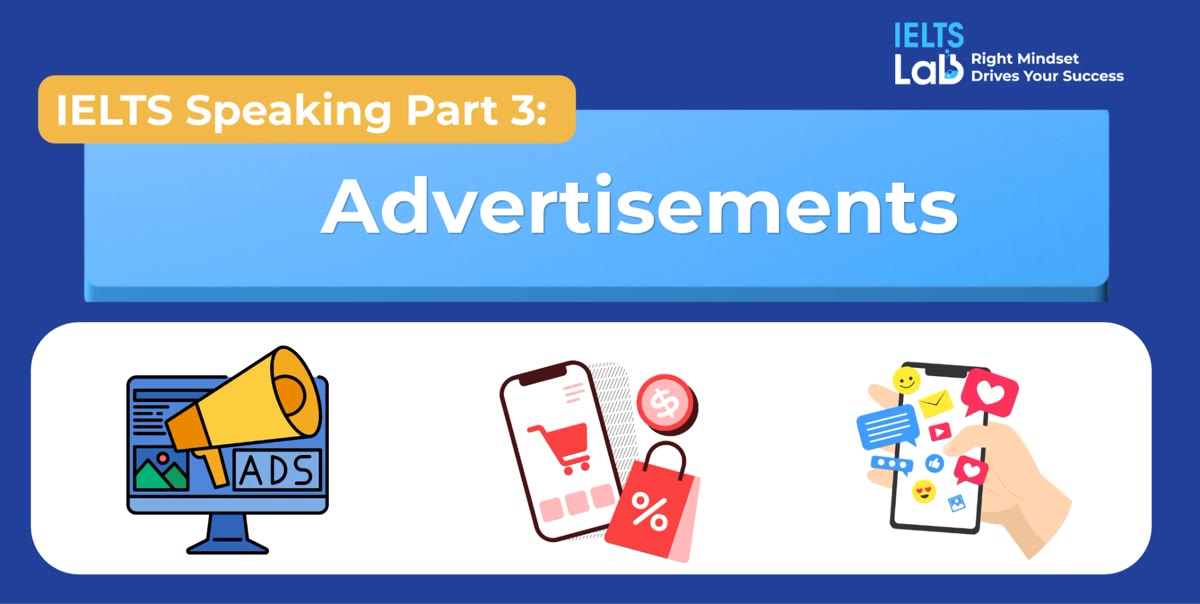
1. Danh sách câu hỏi IELTS Speaking Part 3 – Advertisements
- Why do companies use celebrities in advertisements?
- Do celebrity advertisements influence consumers?
- Are advertisements more creative nowadays?
- What makes an advertisement effective?
- Do children get influenced by advertisements easily?
- Should there be stricter control of advertising?
2. Bài mẫu IELTS Speaking Part 3 – Topic Advertisements
Question 1: Why do companies use celebrities in advertisements?
Sample Answer (Band 8.0+ tham khảo):
| Bài mẫu |
|---|
| Well, companies use celebrities in advertisements because celebrities can attract attention very quickly. If a famous singer, actor, or athlete appears in an ad, people are more likely to stop, watch, and remember the product. For example, a skincare brand may use a popular actress because her image makes the product seem more desirable. Another reason is that celebrities can create a sense of trust. Fans may believe that if someone they admire uses a product, it must be good, fashionable, or worth trying. That is why celebrity advertising works so well: it connects products with fame, beauty, success, and social status. |
Từ vựng nổi bật:
| Từ vựng | Ý nghĩa |
|---|---|
| use celebrities in advertisements | Sử dụng người nổi tiếng trong quảng cáo |
| attract attention | Thu hút sự chú ý |
| famous singer, actor, or athlete | Ca sĩ, diễn viên hoặc vận động viên nổi tiếng |
| be more likely to | Có xu hướng, có khả năng cao hơn |
| remember the product | Ghi nhớ sản phẩm |
| skincare brand | Thương hiệu chăm sóc da |
| more desirable | Hấp dẫn, đáng mong muốn hơn |
| create a sense of trust | Tạo cảm giác tin tưởng |
| someone they admire | Người mà họ ngưỡng mộ |
| worth trying | Đáng để thử |
| celebrity advertising | Quảng cáo sử dụng người nổi tiếng |
| social status | Địa vị xã hội |
Question 2: Do celebrity advertisements influence consumers?
Sample Answer (Band 8.0+ tham khảo):
| Bài mẫu |
|---|
| Absolutely, celebrity advertisements can influence consumers, especially when the celebrity has a strong public image. People may buy a product not only because they need it, but because they want to copy the lifestyle or appearance of the celebrity. For example, young people may be more interested in a pair of shoes if it is promoted by a famous footballer or K-pop idol. However, the influence is not always deep or long-lasting. If the product is poor quality, consumers may feel disappointed and stop trusting both the brand and the celebrity. Celebrity appeal can get people interested, but the product still has to live up to expectations. |
Từ vựng nổi bật:
| Từ vựng | Ý nghĩa |
|---|---|
| influence consumers | Ảnh hưởng đến người tiêu dùng |
| strong public image | Hình ảnh công chúng có sức ảnh hưởng lớn |
| copy the lifestyle | Bắt chước lối sống |
| appearance | Ngoại hình, diện mạo |
| be promoted by | Được quảng bá bởi |
| famous footballer | Cầu thủ bóng đá nổi tiếng |
| K-pop idol | Thần tượng K-pop |
| deep or long-lasting | Sâu sắc hoặc lâu dài |
| poor quality | Chất lượng kém |
| feel disappointed | Cảm thấy thất vọng |
| stop trusting | Ngừng tin tưởng |
| celebrity appeal | Sức hút của người nổi tiếng |
| live up to expectations | Đáp ứng được kỳ vọng |
Question 3: Are advertisements more creative nowadays?
Sample Answer (Band 8.0+ tham khảo):
| Bài mẫu |
|---|
| In my opinion, advertisements are more creative nowadays because brands have to compete for attention in a crowded online world. Many ads now use storytelling, humour, music, short videos, and interactive content instead of simply listing product features. For example, a food delivery app may create a funny TikTok-style video that people enjoy sharing even if they are not planning to order food. However, some ads are creative only on the surface. They may look impressive but still fail to explain why the product is useful. For an ad to really work, creativity needs to support a clear message, not distract from it. |
Từ vựng nổi bật:
| Từ vựng | Ý nghĩa |
|---|---|
| more creative nowadays | Sáng tạo hơn ngày nay |
| compete for attention | Cạnh tranh để thu hút sự chú ý |
| a crowded online world | Môi trường trực tuyến có quá nhiều nội dung cạnh tranh |
| storytelling | Nghệ thuật kể chuyện |
| humour | Yếu tố hài hước |
| interactive content | Nội dung tương tác |
| product features | Các tính năng, đặc điểm của sản phẩm |
| food delivery app | Ứng dụng giao đồ ăn |
| enjoy sharing | Thích chia sẻ |
| creative only on the surface | Chỉ sáng tạo về mặt hình thức |
| look impressive | Trông ấn tượng |
| support a clear message | Hỗ trợ truyền tải thông điệp rõ ràng |
| distract from | Làm phân tán sự chú ý khỏi |
Question 4: What makes an advertisement effective?
Sample Answer (Band 8.0+ tham khảo):
| Bài mẫu |
|---|
| Well, an effective advertisement usually has a clear message and understands its target audience. If people can quickly understand what the product is, why it matters, and how it solves a problem, the ad is already doing a good job. For example, an ad for an English course should not just look beautiful; it should show how the course helps students improve their score or confidence. Another important factor is emotional appeal. Ads that make people laugh, feel inspired, or relate to a familiar situation are often more memorable. In my view, a good advertisement needs both practical information and emotional connection. |
Từ vựng nổi bật:
| Từ vựng | Ý nghĩa |
|---|---|
| effective advertisement | Quảng cáo hiệu quả |
| clear message | Thông điệp rõ ràng |
| target audience | Đối tượng khách hàng mục tiêu |
| solve a problem | Giải quyết một vấn đề |
| do a good job | Hoạt động hiệu quả, làm tốt nhiệm vụ |
| English course | Khóa học tiếng Anh |
| improve their score | Cải thiện điểm số |
| build confidence / improve confidence | Xây dựng hoặc cải thiện sự tự tin |
| emotional appeal | Sức hấp dẫn về mặt cảm xúc |
| feel inspired | Cảm thấy được truyền cảm hứng |
| relate to a familiar situation | Cảm thấy đồng cảm với một tình huống quen thuộc |
| memorable | Đáng nhớ |
| practical information | Thông tin thiết thực |
| emotional connection | Sự kết nối về mặt cảm xúc |
Question 5: Do children get influenced by advertisements easily?
Sample Answer (Band 8.0+ tham khảo):
| Bài mẫu |
|---|
| Yes, children are easily influenced by advertisements because they do not always understand persuasive techniques. If an ad uses bright colours, catchy music, cartoon characters, or famous influencers, children may immediately want the product. For example, a child may ask their parents to buy a snack simply because the packaging looks fun or the ad makes it seem exciting. Children also find it harder to separate entertainment from selling. They may not realise that the purpose of the video is to make them buy something. This is why children need guidance, because they are especially vulnerable to commercial messages. |
Từ vựng nổi bật:
| Từ vựng | Ý nghĩa |
|---|---|
| easily influenced by advertisements | Dễ bị ảnh hưởng bởi quảng cáo |
| persuasive techniques | Các kỹ thuật thuyết phục |
| bright colours | Màu sắc bắt mắt |
| catchy music | Âm nhạc bắt tai |
| cartoon characters | Nhân vật hoạt hình |
| famous influencers | Người có sức ảnh hưởng nổi tiếng |
| packaging | Bao bì sản phẩm |
| separate entertainment from selling | Phân biệt nội dung giải trí với hoạt động bán hàng |
| make them buy something | Khiến họ mua một thứ gì đó |
| guidance | Sự hướng dẫn, định hướng |
| vulnerable to | Dễ bị tác động, dễ bị tổn thương bởi |
| commercial messages | Thông điệp mang tính thương mại |
Question 6: Should there be stricter control of advertising?
Sample Answer (Band 8.0+ tham khảo):
| Bài mẫu |
|---|
| From my perspective, there should be stricter control of advertising, especially for products aimed at children or related to health. Some ads exaggerate benefits, hide risks, or create unrealistic expectations, which can mislead consumers. For example, ads for beauty products or weight-loss products may make people feel insecure about their appearance. However, advertising should not be controlled so strictly that businesses lose all creativity. Companies still need space to promote products and communicate with customers. A reasonable system would control false claims, harmful messages, and unfair manipulation, while still allowing creative advertising. |
Từ vựng nổi bật:
| Từ vựng | Ý nghĩa |
|---|---|
| stricter control of advertising | Sự kiểm soát quảng cáo chặt chẽ hơn |
| aimed at children | Nhắm đến trẻ em |
| related to health | Liên quan đến sức khỏe |
| exaggerate benefits | Phóng đại lợi ích |
| hide risks | Che giấu rủi ro |
| create unrealistic expectations | Tạo ra những kỳ vọng thiếu thực tế |
| mislead consumers | Gây hiểu lầm cho người tiêu dùng |
| beauty products | Sản phẩm làm đẹp |
| weight-loss products | Sản phẩm giảm cân |
| feel insecure about their appearance | Cảm thấy tự ti về ngoại hình |
| lose all creativity | Mất đi toàn bộ tính sáng tạo |
| promote products | Quảng bá sản phẩm |
| communicate with customers | Giao tiếp với khách hàng |
| false claims | Những tuyên bố sai sự thật |
| harmful messages | Thông điệp có hại |
| unfair manipulation | Sự thao túng không công bằng |
3. Mẹo trả lời IELTS Speaking Part 3 chủ đề Advertisements
Đối với chủ đề Advertisements, thí sinh không chỉ cần vốn từ vựng liên quan đến quảng cáo mà còn phải biết cách phân tích hành vi người tiêu dùng, đánh giá hiệu quả truyền thông và trình bày quan điểm về trách nhiệm xã hội của doanh nghiệp.
Giải thích nguyên nhân thay vì chỉ đưa ra nhận định: Khi gặp câu hỏi như Why do companies use celebrities in advertisements?, thay vì chỉ trả lời rằng người nổi tiếng giúp bán được nhiều sản phẩm hơn, hãy giải thích cơ chế tác động: họ thu hút sự chú ý, tạo niềm tin và khiến sản phẩm trở nên hấp dẫn trong mắt người tiêu dùng.
Đưa ra ví dụ thực tế: Chủ đề Advertisements rất phù hợp để sử dụng ví dụ về quảng cáo mỹ phẩm, đồ ăn, sản phẩm công nghệ, khóa học tiếng Anh hoặc các chiến dịch có sự tham gia của người nổi tiếng.
Phân tích cả lợi ích và hạn chế: Với câu hỏi Do celebrity advertisements influence consumers?, bạn có thể đồng ý rằng người nổi tiếng có sức ảnh hưởng lớn nhưng đồng thời chỉ ra rằng sức hút này không thể thay thế chất lượng thực tế của sản phẩm.
Phát triển ý tưởng từ nhiều góc độ: Ngoài hiệu quả kinh doanh, bạn có thể mở rộng câu trả lời sang tâm lý người tiêu dùng, sức ảnh hưởng của mạng xã hội, quyền lợi trẻ em và tính trung thực trong quảng cáo.
Sử dụng các cụm từ tự nhiên: Thay vì chỉ ghi nhớ những từ như advertisement, product, customer, hãy luyện các cụm như attract attention, target audience, emotional appeal, influence consumers, live up to expectations và mislead consumers.
4. Lời kết
Chủ đề Advertisements trong IELTS Speaking Part 3 không chỉ đề cập đến quảng cáo sản phẩm mà còn mở rộng sang truyền thông, tâm lý khách hàng, sức ảnh hưởng của người nổi tiếng và trách nhiệm của doanh nghiệp đối với xã hội.
Hy vọng 6 bài mẫu trên sẽ giúp bạn mở rộng vốn từ, phát triển khả năng lập luận và tự tin hơn khi trả lời những câu hỏi mang tính phân tích trong IELTS Speaking Part 3.
Đừng quên theo dõi IELTS Lab để cập nhật thêm các bài mẫu IELTS Speaking theo chủ đề, từ vựng hữu ích và phương pháp luyện thi IELTS hiệu quả nhé!











Để lại một bình luận
Bạn phải đăng nhập để gửi bình luận.