 0969-435-240
 info@ieltslab.edu.vn

 Liên hệ ngay
Learning Languages (Học ngoại ngữ) là một chủ đề quen thuộc trong IELTS Speaking Part 3, tập trung vào những vấn đề như động lực học ngoại ngữ, sự khác biệt giữa người học, vai trò của công nghệ và phương pháp học ngôn ngữ hiệu quả.
Với chủ đề này, thí sinh cần biết cách giải thích nguyên nhân, phân tích lợi ích, so sánh các nhóm người học và đưa ra những ví dụ thực tế. Cùng IELTS Lab tham khảo 6 bài mẫu IELTS Speaking Part 3 chủ đề Learning Languages, kèm các từ vựng và cụm diễn đạt hữu ích để phát triển câu trả lời tự nhiên và mạch lạc hơn nhé!
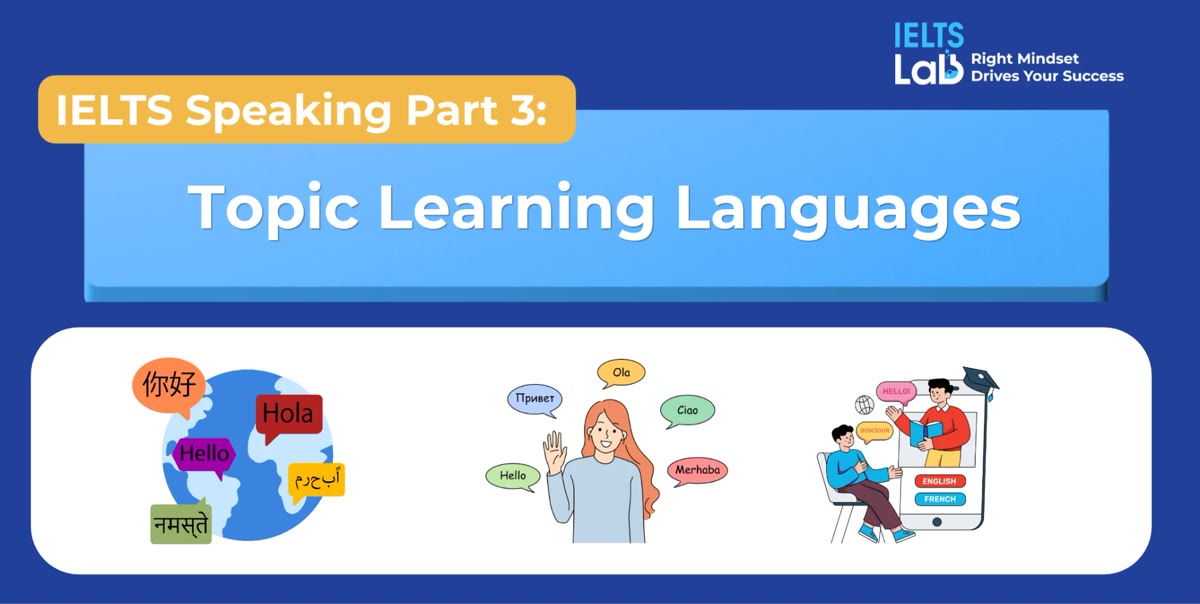
1. Danh sách câu hỏi IELTS Speaking Part 3 – Learning Languages
- Why are some people better at learning languages than others?
- Is it easier for children to learn languages?
- What is the best way to learn a foreign language?
- Why do people learn foreign languages?
- Can technology help language learning?
- Should schools teach more foreign languages?
2. Bài mẫu IELTS Speaking Part 3 – Topic Learning Languages
Question 1: Why are some people better at learning languages than others?
Sample Answer (Band 8.0+ tham khảo):
| Bài mẫu |
|---|
| Well, some people are better at learning languages because they have stronger motivation and better study habits. A person who practises regularly, listens actively, and is not afraid of making mistakes will usually improve faster. For example, a student who speaks English a little every day may progress more quickly than someone who only studies grammar before exams. Another factor is exposure. People who watch films, read books, talk to foreigners, or use the language in real situations have more chances to pick up natural expressions. I think language ability is not only about talent; it depends heavily on attitude, practice, and consistent exposure. |
Từ vựng nổi bật:
| Từ vựng | Ý nghĩa |
|---|---|
| be better at learning languages | Học ngôn ngữ tốt hơn |
| stronger motivation | Động lực mạnh mẽ hơn |
| better study habits | Thói quen học tập tốt hơn |
| practise regularly | Luyện tập thường xuyên |
| listen actively | Nghe một cách chủ động |
| be not afraid of making mistakes | Không sợ mắc lỗi |
| improve faster | Tiến bộ nhanh hơn |
| progress more quickly | Tiến bộ nhanh chóng hơn |
| study grammar | Học ngữ pháp |
| exposure | Sự tiếp xúc thường xuyên với ngôn ngữ |
| talk to foreigners | Trò chuyện với người nước ngoài |
| real situations | Những tình huống thực tế |
| pick up natural expressions | Tiếp thu các cách diễn đạt tự nhiên |
| language ability | Khả năng ngôn ngữ |
| consistent exposure | Sự tiếp xúc đều đặn, liên tục |
Question 2: Is it easier for children to learn languages?
Sample Answer (Band 8.0+ tham khảo):
| Bài mẫu |
|---|
| Yes, I think children often find it easier to learn languages in terms of pronunciation and natural communication. They are less afraid of making mistakes, so they may copy sounds, repeat phrases, and speak more freely. For example, a child in a bilingual environment can often learn two languages naturally through daily interaction. However, adults may be better at understanding grammar rules and learning with clear goals. An adult who studies seriously for work, exams, or immigration may make fast progress because they have discipline and motivation. I’d say children may learn more naturally, but adults can still succeed with effective methods. |
Từ vựng nổi bật:
| Từ vựng | Ý nghĩa |
|---|---|
| find it easier to | Cảm thấy việc gì dễ dàng hơn |
| pronunciation | Phát âm |
| natural communication | Giao tiếp tự nhiên |
| less afraid of making mistakes | Ít sợ mắc lỗi hơn |
| copy sounds | Bắt chước âm thanh |
| repeat phrases | Lặp lại các cụm từ |
| speak more freely | Nói tự nhiên, thoải mái hơn |
| bilingual environment | Môi trường song ngữ |
| daily interaction | Sự tương tác hằng ngày |
| understand grammar rules | Hiểu các quy tắc ngữ pháp |
| learn with clear goals | Học với mục tiêu rõ ràng |
| make fast progress | Tiến bộ nhanh |
| discipline and motivation | Tính kỷ luật và động lực |
| learn more naturally | Tiếp thu tự nhiên hơn |
| effective methods | Các phương pháp hiệu quả |
Question 3: What is the best way to learn a foreign language?
Sample Answer (Band 8.0+ tham khảo):
| Bài mẫu |
|---|
| In my opinion, the best way to learn a foreign language is to combine input and output. Learners need to listen and read a lot so they can build vocabulary, understand sentence patterns, and get used to the natural rhythm of the language. For example, students can watch short videos, read simple articles, or listen to podcasts at their level. At the same time, they also need to speak and write because passive knowledge is not enough. If learners only memorise words but never use them, the language may stay in their head but not come out naturally. The most effective method, I think, is regular exposure plus active practice in real-life contexts. |
Từ vựng nổi bật:
| Từ vựng | Ý nghĩa |
|---|---|
| combine input and output | Kết hợp tiếp nhận và sử dụng ngôn ngữ |
| listen and read a lot | Nghe và đọc nhiều |
| build vocabulary | Xây dựng vốn từ vựng |
| understand sentence patterns | Hiểu các mẫu câu |
| get used to | Làm quen với |
| natural rhythm of the language | Nhịp điệu tự nhiên của ngôn ngữ |
| at their level | Phù hợp với trình độ của họ |
| speak and write | Nói và viết |
| passive knowledge | Kiến thức thụ động |
| memorise words | Học thuộc từ vựng |
| come out naturally | Được sử dụng, diễn đạt một cách tự nhiên |
| the most effective method | Phương pháp hiệu quả nhất |
| regular exposure | Sự tiếp xúc thường xuyên |
| active practice | Luyện tập chủ động |
| real-life contexts | Những ngữ cảnh thực tế |
Question 4: Why do people learn foreign languages?
Sample Answer (Band 8.0+ tham khảo):
| Bài mẫu |
|---|
| Well, people learn foreign languages for many reasons, but career and education are probably the most common. A foreign language can help people study abroad, get better jobs, work with international clients, or access more information. For example, English is extremely useful for Vietnamese students who want scholarships or global career opportunities. Another reason is personal enjoyment. Some people learn Korean, Japanese, Chinese, or French because they love the culture, music, films, or travel experiences connected to that language. In many cases, foreign languages are valuable because they open both practical opportunities and cultural doors. |
Từ vựng nổi bật:
| Từ vựng | Ý nghĩa |
|---|---|
| learn foreign languages | Học ngoại ngữ |
| career and education | Sự nghiệp và giáo dục |
| study abroad | Đi du học |
| get better jobs | Có được công việc tốt hơn |
| work with international clients | Làm việc với khách hàng quốc tế |
| access more information | Tiếp cận nhiều thông tin hơn |
| extremely useful | Vô cùng hữu ích |
| scholarships | Học bổng |
| global career opportunities | Cơ hội nghề nghiệp toàn cầu |
| personal enjoyment | Niềm vui, sở thích cá nhân |
| culture, music, films | Văn hóa, âm nhạc, phim ảnh |
| travel experiences | Những trải nghiệm du lịch |
| be connected to | Có liên quan, gắn liền với |
| practical opportunities | Những cơ hội thiết thực |
| open cultural doors | Mở ra cơ hội tiếp cận các nền văn hóa |
Question 5: Can technology help language learning?
Sample Answer (Band 8.0+ tham khảo):
| Bài mẫu |
|---|
| Absolutely, technology can help language learning because it gives learners access to many resources. Students can use apps, online dictionaries, subtitles, videos, podcasts, and AI tools to practise almost anywhere. For example, a learner can record their voice, check pronunciation, and review vocabulary on a phone while commuting. However, technology is only helpful if people use it actively. Watching English videos all day without speaking, taking notes, or reviewing useful phrases may not lead to much improvement. Technology can support learning very well, but it cannot replace discipline, interaction, and active use of the language. |
Từ vựng nổi bật:
| Từ vựng | Ý nghĩa |
|---|---|
| help language learning | Hỗ trợ việc học ngôn ngữ |
| access to many resources | Khả năng tiếp cận nhiều nguồn tài liệu |
| online dictionaries | Từ điển trực tuyến |
| subtitles | Phụ đề |
| AI tools | Công cụ trí tuệ nhân tạo |
| practise almost anywhere | Luyện tập ở gần như mọi nơi |
| record their voice | Ghi âm giọng nói của mình |
| check pronunciation | Kiểm tra phát âm |
| review vocabulary | Ôn tập từ vựng |
| while commuting | Trong lúc di chuyển đi học hoặc đi làm |
| use it actively | Sử dụng một cách chủ động |
| take notes | Ghi chép |
| useful phrases | Những cụm từ hữu ích |
| lead to much improvement | Dẫn đến sự tiến bộ đáng kể |
| support learning | Hỗ trợ học tập |
| replace discipline | Thay thế tính kỷ luật |
| interaction | Sự tương tác |
| active use of the language | Việc chủ động sử dụng ngôn ngữ |
Question 6: Should schools teach more foreign languages?
Sample Answer (Band 8.0+ tham khảo):
| Bài mẫu |
|---|
| From my perspective, schools should teach more foreign languages, but they need to do it realistically. Learning another language can help students understand different cultures, increase career opportunities, and become more confident in international settings. For example, besides English, students may benefit from learning Chinese, Japanese, or Korean because Vietnam has many connections with these countries. However, schools should not overload students with too many languages at the same time. If the teaching quality is poor or students do not have enough time to practise, the result may be very superficial. I would support more language education, as long as schools focus on quality over quantity. |
Từ vựng nổi bật:
| Từ vựng | Ý nghĩa |
|---|---|
| teach more foreign languages | Dạy thêm nhiều ngoại ngữ |
| realistically | Một cách thực tế, khả thi |
| learn another language | Học thêm một ngôn ngữ |
| understand different cultures | Hiểu các nền văn hóa khác nhau |
| increase career opportunities | Gia tăng cơ hội nghề nghiệp |
| become more confident | Trở nên tự tin hơn |
| international settings | Môi trường quốc tế |
| benefit from learning | Nhận được lợi ích từ việc học |
| have many connections with | Có nhiều mối quan hệ, sự kết nối với |
| overload students | Gây quá tải cho học sinh |
| at the same time | Cùng một lúc |
| teaching quality | Chất lượng giảng dạy |
| have enough time to practise | Có đủ thời gian luyện tập |
| superficial | Hời hợt, thiếu chiều sâu |
| language education | Giáo dục ngôn ngữ |
| focus on quality over quantity | Ưu tiên chất lượng hơn số lượng |
3. Mẹo trả lời IELTS Speaking Part 3 chủ đề Learning Languages
Chủ đề Learning Languages yêu cầu thí sinh không chỉ chia sẻ kinh nghiệm học ngoại ngữ mà còn phải biết phân tích các yếu tố ảnh hưởng đến quá trình học tập và đánh giá vai trò của giáo dục, công nghệ.
Giải thích những yếu tố ảnh hưởng đến khả năng học ngôn ngữ: Với câu hỏi Why are some people better at learning languages than others?, bạn nên phân tích các yếu tố cụ thể như động lực, phương pháp học, tần suất luyện tập và mức độ tiếp xúc với ngôn ngữ, thay vì chỉ cho rằng một số người có năng khiếu bẩm sinh.
Sử dụng cấu trúc so sánh: Khi trả lời Is it easier for children to learn languages?, bạn có thể so sánh việc trẻ em dễ bắt chước âm thanh và tiếp thu tự nhiên với khả năng học có mục tiêu, hiểu quy tắc ngữ pháp và tính kỷ luật của người trưởng thành.
Đưa ra các ví dụ gần gũi: Chủ đề này rất phù hợp để lấy ví dụ từ việc luyện IELTS, học tiếng Anh qua video, sử dụng ứng dụng học ngôn ngữ, giao tiếp với người nước ngoài hoặc chuẩn bị hồ sơ du học.
Phân tích cả ưu điểm và hạn chế: Khi nói về công nghệ, đừng chỉ đề cập đến việc các ứng dụng giúp học tập thuận tiện. Bạn có thể mở rộng rằng công nghệ chỉ thực sự phát huy hiệu quả khi được kết hợp với luyện tập chủ động và giao tiếp thực tế.
Ưu tiên học theo cụm từ: Thay vì học riêng lẻ các từ learn, language, practise, hãy ghi nhớ các cụm như pick up natural expressions, make fast progress, build vocabulary, regular exposure, active practice và focus on quality over quantity để diễn đạt ý tưởng tự nhiên hơn.
4. Lời kết
Chủ đề Learning Languages trong IELTS Speaking Part 3 giúp thí sinh thảo luận về nhiều khía cạnh của việc học ngoại ngữ, từ động lực cá nhân, sự khác biệt giữa trẻ em và người lớn đến vai trò của công nghệ và hệ thống giáo dục.
Thông qua 6 bài mẫu trên, IELTS Lab hy vọng bạn có thể mở rộng vốn từ vựng, học cách phát triển lập luận và vận dụng những cách diễn đạt tự nhiên vào câu trả lời của mình.
Đừng quên theo dõi IELTS Lab để cập nhật thêm những bài mẫu IELTS Speaking theo chủ đề, từ vựng hữu ích và phương pháp luyện thi hiệu quả nhé!












Để lại một bình luận
Bạn phải đăng nhập để gửi bình luận.