 0969-435-240
 info@ieltslab.edu.vn

 Liên hệ ngay
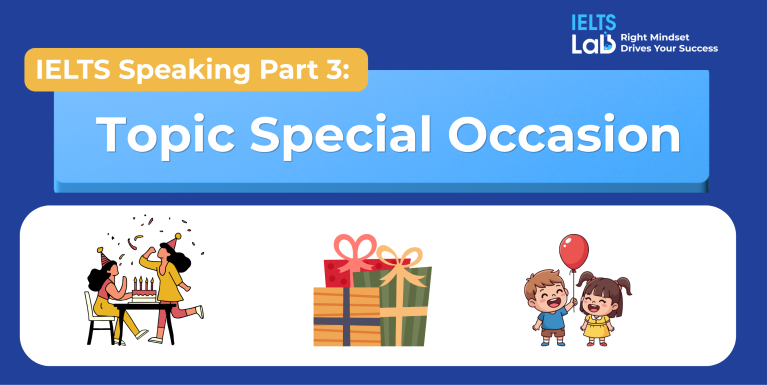
Special Occasions (Những dịp đặc biệt) là một chủ đề quen thuộc trong IELTS Speaking Part 3, với các câu hỏi xoay quanh ẩm thực ngày lễ, những món ăn truyền thống, sự thay đổi trong thói quen ăn uống và vai trò của bữa ăn đối với các mối quan hệ gia đình.
Cùng IELTS Lab tham khảo 7 bài mẫu Speaking Part 3 Band 8.0+ và những từ vựng hữu ích để phát triển câu trả lời tự nhiên, mạch lạc hơn nhé!
1. Danh sách câu hỏi IELTS Speaking Part 3 – Special Occasions
Dưới đây là 7 câu hỏi thuộc chủ đề Special Occasions để bạn luyện tập:
|
2. Bài mẫu IELTS Speaking Part 3 – Topic Special Occasions
Question 1: Why is food important during special occasions in your country?
Sample Answer (Band 8.0+ tham khảo):
| Bài mẫu |
|---|
| Well, food is very important during special occasions in Vietnam because it brings people together. During Tet, weddings, anniversaries, or family gatherings, people often prepare special dishes to show care, respect, and hospitality. A meal is not just about eating; it is a way to create a warm family atmosphere. Another reason is that certain dishes carry cultural meaning. For example, traditional foods during Tet can represent luck, reunion, and gratitude to ancestors. So, I think food plays both a social and symbolic role in special occasions. |
Từ vựng nổi bật:
| Từ vựng | Ý nghĩa |
|---|---|
| bring people together | Gắn kết mọi người |
| family gatherings | Những buổi sum họp gia đình |
| show care, respect, and hospitality | Thể hiện sự quan tâm, tôn trọng và lòng hiếu khách |
| a warm family atmosphere | Bầu không khí gia đình ấm cúng |
| carry cultural meaning | Mang ý nghĩa văn hóa |
| represent luck and reunion | Tượng trưng cho may mắn và sự đoàn viên |
| gratitude to ancestors | Lòng biết ơn đối với tổ tiên |
| a social and symbolic role | Vai trò xã hội và ý nghĩa biểu tượng |
Question 2: What kinds of food do people usually eat during festivals or family celebrations?
Sample Answer (Band 8.0+ tham khảo):
| Bài mẫu |
|---|
| Well, people usually eat traditional dishes that are connected with family and culture. During Tet, many Vietnamese families prepare bánh chưng, pickled onions, boiled chicken, spring rolls, sticky rice, and different kinds of soup. At weddings or anniversaries, people may eat dishes like hotpot, seafood, roasted chicken, or special desserts. These foods are popular because they are suitable for sharing and create a sense of togetherness. Another reason is that people often choose dishes that look generous and festive. |
Từ vựng nổi bật:
| Từ vựng | Ý nghĩa |
|---|---|
| traditional dishes | Những món ăn truyền thống |
| pickled onions | Hành muối |
| spring rolls | Nem cuốn hoặc nem rán, tùy cách chế biến |
| sticky rice | Xôi |
| special desserts | Những món tráng miệng đặc biệt |
| suitable for sharing | Phù hợp để mọi người cùng thưởng thức |
| create a sense of togetherness | Tạo cảm giác sum vầy, gắn kết |
| generous and festive | Thịnh soạn và mang không khí lễ hội |
Question 3: Do you think young people prefer traditional food or fast food? Why?
Sample Answer (Band 8.0+ tham khảo):
| Bài mẫu |
|---|
| To be honest, many young people like fast food because it is quick, convenient, and heavily promoted online. Burgers, fried chicken, pizza, and milk tea are easy to buy and feel modern or trendy. For students and office workers, fast food can also be a simple choice when they are busy. However, traditional food is still important because young people grow up with dishes like phở, bánh mì, bún chả, and home-cooked meals. Many of them may eat fast food for fun but return to traditional food for comfort and daily life. So, I’d say fast food is popular, but traditional food still has a special place in young people’s hearts. |
Từ vựng nổi bật:
| Từ vựng | Ý nghĩa |
|---|---|
| quick and convenient | Nhanh chóng và tiện lợi |
| heavily promoted online | Được quảng bá mạnh mẽ trên Internet |
| modern or trendy | Hiện đại hoặc hợp xu hướng |
| grow up with something | Lớn lên cùng, gắn bó với điều gì từ nhỏ |
| home-cooked meals | Những bữa ăn được nấu tại nhà |
| return to traditional food | Quay lại lựa chọn món ăn truyền thống |
| have a special place in someone’s heart | Có vị trí đặc biệt trong lòng ai đó |
Question 4: How have people’s eating habits changed compared to the past?
Sample Answer (Band 8.0+ tham khảo):
| Bài mẫu |
|---|
| Well, people’s eating habits have changed a lot because modern life is busier and more convenient. In the past, families cooked at home more often and meals were usually slower and more traditional. Nowadays, people order food online, eat out more, and choose quick meals because they may not have time to cook. Another change is that people are more exposed to foreign food, such as Korean, Japanese, Thai, and Western dishes. At the same time, many people are also becoming more health-conscious and paying attention to calories, sugar, and clean ingredients. I guess eating habits have become more diverse, convenient, and sometimes less family-centred. |
Từ vựng nổi bật:
| Từ vựng | Ý nghĩa |
|---|---|
| eating habits | Thói quen ăn uống |
| eat out more | Đi ăn ngoài thường xuyên hơn |
| order food online | Đặt đồ ăn trực tuyến |
| be exposed to foreign food | Có cơ hội tiếp xúc với ẩm thực nước ngoài |
| health-conscious | Quan tâm, có ý thức về sức khỏe |
| clean ingredients | Nguyên liệu sạch |
| diverse and convenient | Đa dạng và tiện lợi |
| less family-centred | Ít xoay quanh sinh hoạt gia đình hơn |
Question 5: Do you think eating together helps strengthen family relationships? Why?
Sample Answer (Band 8.0+ tham khảo):
| Bài mẫu |
|---|
| Absolutely, I think eating together can strengthen family relationships because it gives people time to talk and connect. In a busy family, dinner may be one of the few moments when everyone sits in the same place. They can share news, discuss problems, or simply laugh about small things from the day. Another reason is that shared meals create routines and memories. Children who regularly eat with their parents may feel more cared for and emotionally secure. |
Từ vựng nổi bật:
| Từ vựng | Ý nghĩa |
|---|---|
| strengthen family relationships | Củng cố các mối quan hệ gia đình |
| time to talk and connect | Thời gian để trò chuyện và kết nối |
| share news | Chia sẻ những chuyện trong ngày |
| discuss problems | Thảo luận về những vấn đề |
| laugh about small things | Cười vui về những chuyện nhỏ nhặt |
| create routines and memories | Hình thành thói quen và những kỷ niệm |
| feel cared for | Cảm thấy được quan tâm, chăm sóc |
| emotionally secure | Cảm thấy an toàn về mặt cảm xúc |
Question 6: Is it better to cook at home or eat at restaurants on special occasions?
Sample Answer (Band 8.0+ tham khảo):
| Bài mẫu |
|---|
| Well, both can be good, depending on the occasion and the family’s situation. Cooking at home feels warmer and more personal because family members can prepare dishes together and follow traditions. It is also cheaper and allows people to choose ingredients carefully. On the other hand, eating at restaurants is more convenient, especially when there are many guests or people are too busy to cook. Restaurants also reduce the stress of cleaning and preparation. All in all, home cooking is better for intimacy, while restaurants are better for convenience and large gatherings. |
Từ vựng nổi bật:
| Từ vựng | Ý nghĩa |
|---|---|
| feel warmer and more personal | Mang lại cảm giác ấm cúng và gần gũi hơn |
| follow traditions | Duy trì các truyền thống |
| choose ingredients carefully | Lựa chọn nguyên liệu cẩn thận |
| reduce the stress of cleaning and preparation | Giảm áp lực dọn dẹp và chuẩn bị |
| better for intimacy | Phù hợp hơn để tạo sự gần gũi |
| large gatherings | Những buổi tụ họp đông người |
| depending on the occasion | Tùy thuộc vào dịp cụ thể |
Question 7: What is special about the way this food is made?
Sample Answer (Band 8.0+ tham khảo):
| Bài mẫu |
|---|
| Well, many traditional Vietnamese dishes are special because they require patience and careful preparation. For example, bánh chưng is made by wrapping sticky rice, mung beans, and pork in leaves, then boiling it for many hours. The process is slow, but that is what makes the dish meaningful during Tet. Another special thing is that family members often prepare it together, so the cooking process becomes a social activity. It is not just about the final taste, but also about tradition, teamwork, and memory. |
Từ vựng nổi bật:
| Từ vựng | Ý nghĩa |
|---|---|
| require patience | Đòi hỏi sự kiên nhẫn |
| careful preparation | Sự chuẩn bị kỹ lưỡng |
| sticky rice | Gạo nếp |
| mung beans | Đậu xanh |
| wrap something in leaves | Gói thứ gì đó trong lá |
| make the dish meaningful | Khiến món ăn trở nên ý nghĩa |
| a social activity | Hoạt động mang tính gắn kết, giao lưu |
| tradition, teamwork, and memory | Truyền thống, sự hợp tác và kỷ niệm |
3. Mẹo trả lời IELTS Speaking Part 3 chủ đề Special Occasions
Để trả lời tốt các câu hỏi IELTS Speaking Part 3 – Special Occasions, bạn nên chú ý:
- Phát triển ý từ nhiều góc độ: Phân tích vai trò của ẩm thực trong văn hóa, truyền thống, các mối quan hệ gia đình và lối sống hiện đại.
- Đưa ra ví dụ thực tế: Liên hệ đến Tết Nguyên đán, đám cưới, sinh nhật, các món ăn truyền thống như bánh chưng, phở hoặc những bữa cơm gia đình.
- So sánh và đánh giá: Với câu hỏi về đồ ăn truyền thống và đồ ăn nhanh, hoặc nấu ăn tại nhà và ăn ngoài, hãy phân tích lợi ích của từng lựa chọn trước khi đưa ra kết luận.
- Sử dụng collocations tự nhiên: Những cụm từ như bring people together, create a sense of togetherness, strengthen family relationships, health-conscious, careful preparation giúp câu trả lời tự nhiên và chính xác hơn.
4. Luyện tập IELTS Speaking Part 3 cùng IELTS Lab
Chủ đề Special Occasions không chỉ kiểm tra vốn từ về lễ hội và ẩm thực mà còn yêu cầu thí sinh phân tích ý nghĩa văn hóa, so sánh thói quen ăn uống và giải thích vai trò của những bữa ăn trong việc gắn kết con người.
Hy vọng 7 bài mẫu IELTS Speaking Part 3 – Special Occasions trên sẽ giúp bạn mở rộng vốn từ, phát triển lập luận và tự tin hơn trong phòng thi.
Đừng quên theo dõi IELTS Lab để cập nhật thêm các bài mẫu IELTS Speaking theo chủ đề và phương pháp luyện thi hiệu quả nhé!




Để lại một bình luận
Bạn phải đăng nhập để gửi bình luận.