 0969-435-240
 info@ieltslab.edu.vn

 Liên hệ ngay
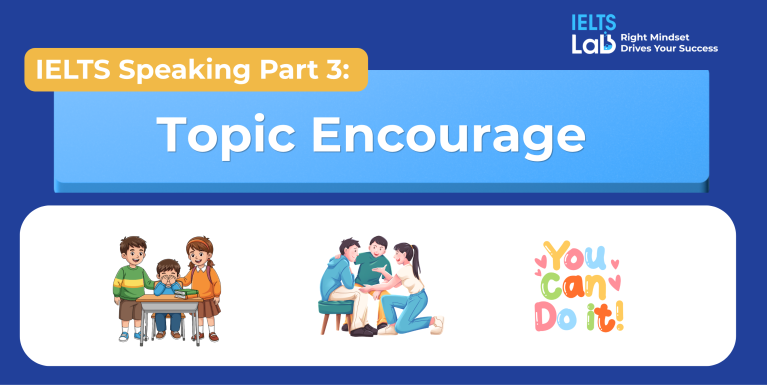
Encourage (Khuyến khích và động viên) là một chủ đề quen thuộc trong IELTS Speaking Part 3, với các câu hỏi xoay quanh cách cha mẹ khích lệ con cái, phương pháp tạo động lực trong công việc và vai trò của sự ghi nhận, khen thưởng đối với mỗi người.
Cùng IELTS Lab tham khảo 6 bài mẫu Speaking Part 3 Band 8.0+ và những từ vựng hữu ích để phát triển câu trả lời tự nhiên, mạch lạc hơn nhé!
1. Danh sách câu hỏi IELTS Speaking Part 3 – Encourage
Dưới đây là 6 câu hỏi thuộc chủ đề Encourage để bạn luyện tập:
|
2. Bài mẫu IELTS Speaking Part 3 – Topic Encourage
Question 1: In what situations do parents need to encourage their children to do something?
Sample Answer (Band 8.0+ tham khảo):
| Bài mẫu |
|---|
| Well, parents need to encourage children when they are afraid, lazy, or lacking confidence. For example, a child may need encouragement to try a new sport, speak English in class, join a competition, or apologize after making a mistake. In these situations, children may want to avoid discomfort, even though the activity is good for them. Another common situation is when children face failure. If they get a low score or lose a game, parents can help them keep going instead of giving up. So, I think encouragement is most needed when children have to step outside their comfort zone. |
Từ vựng nổi bật:
| Từ vựng | Ý nghĩa |
|---|---|
| lack confidence | Thiếu tự tin |
| need encouragement | Cần sự động viên |
| avoid discomfort | Tránh những tình huống gây khó chịu |
| face failure | Đối mặt với thất bại |
| keep going | Tiếp tục cố gắng |
| give up | Từ bỏ |
| step outside one’s comfort zone | Bước ra khỏi vùng an toàn |
Question 2: What ways can parents use to encourage children to do things they don’t want to do?
Sample Answer (Band 8.0+ tham khảo):
| Bài mẫu |
|---|
| Well, parents can encourage children by explaining the reason behind the task in a simple way. If children understand why homework, housework, or exercise is useful, they may be more willing to do it. Parents can also break big tasks into smaller steps so children do not feel overwhelmed. Another good method is praise. When children make effort, parents should notice it and give positive reinforcement rather than only criticizing mistakes. |
Từ vựng nổi bật:
| Từ vựng | Ý nghĩa |
|---|---|
| explain the reason behind something | Giải thích lý do đằng sau một việc |
| be more willing to do something | Sẵn sàng làm điều gì hơn |
| break big tasks into smaller steps | Chia công việc lớn thành những bước nhỏ |
| feel overwhelmed | Cảm thấy quá tải |
| praise | Sự khen ngợi |
| make an effort | Nỗ lực, cố gắng |
| positive reinforcement | Sự củng cố tích cực, khuyến khích hành vi tốt |
Question 3: Why do children often not want to do what their parents ask?
Sample Answer (Band 8.0+ tham khảo):
| Bài mẫu |
|---|
| To be honest, children often refuse because they do not understand the importance of what parents ask them to do. For example, they may not want to study, sleep early, or clean their room because these things seem boring compared with games or cartoons. Another reason is that children naturally want more freedom. If parents give orders too strictly, children may resist simply because they want to have a say in their own life. Sometimes the problem is not the task itself, but the way it is communicated. All in all, I think children disobey for a mix of immaturity, boredom, and the desire for independence. |
Từ vựng nổi bật:
| Từ vựng | Ý nghĩa |
|---|---|
| refuse to do something | Từ chối làm điều gì |
| give orders too strictly | Ra lệnh một cách quá nghiêm khắc |
| have a say | Có tiếng nói, được tham gia quyết định |
| disobey | Không vâng lời |
| immaturity | Sự thiếu trưởng thành |
| boredom | Sự nhàm chán |
| the desire for independence | Mong muốn được tự lập |
Question 4: How can employees be encouraged to work hard?
Sample Answer (Band 8.0+ tham khảo):
| Bài mẫu |
|---|
| Well, employees can be encouraged through fair pay, recognition, promotion opportunities, and a positive working environment. Money is important because people need to feel that their effort is properly rewarded. However, praise and trust also matter because employees want to feel respected, not treated like machines. For example, when a manager notices someone’s contribution, that employee may feel more motivated to go the extra mile. Another way is to give employees meaningful tasks and clear goals. So, I think people work harder when they feel valued, capable, and fairly treated. |
Từ vựng nổi bật:
| Từ vựng | Ý nghĩa |
|---|---|
| fair pay | Mức lương công bằng |
| recognition | Sự ghi nhận |
| promotion opportunities | Cơ hội thăng tiến |
| a positive working environment | Môi trường làm việc tích cực |
| be properly rewarded | Được tưởng thưởng xứng đáng |
| feel respected | Cảm thấy được tôn trọng |
| go the extra mile | Nỗ lực vượt hơn mức được yêu cầu |
| meaningful tasks and clear goals | Công việc có ý nghĩa và mục tiêu rõ ràng |
Question 5: Do you agree or disagree that the most important role of a boss is to encourage employees?
Sample Answer (Band 8.0+ tham khảo):
| Bài mẫu |
|---|
| In my opinion, encouraging employees is one of the most important roles of a boss, but it is not the only one. A good boss should motivate people, give feedback, and create a positive team spirit. If employees feel supported, they are more likely to work hard and stay with the company. However, a boss also has to make decisions, solve problems, manage performance, and set clear standards. Encouragement without direction can become too soft and ineffective. In summary, I’d say the best boss encourages people while still keeping the team focused and accountable. |
Từ vựng nổi bật:
| Từ vựng | Ý nghĩa |
|---|---|
| motivate people | Tạo động lực cho mọi người |
| give feedback | Đưa ra phản hồi |
| create a positive team spirit | Xây dựng tinh thần đồng đội tích cực |
| manage performance | Quản lý hiệu suất làm việc |
| set clear standards | Đặt ra các tiêu chuẩn rõ ràng |
| soft and ineffective | Thiếu sự cứng rắn và không hiệu quả |
| focused and accountable | Tập trung và có trách nhiệm giải trình |
Question 6: Are people at work more motivated by praise or money?
Sample Answer (Band 8.0+ tham khảo):
| Bài mẫu |
|---|
| To be honest, I think it depends on the person and the situation. Money is usually the first priority because employees need salaries to pay rent, support family, and plan for the future. If the pay is too low, praise alone will not keep people motivated for long. However, once people are paid fairly, praise can become extremely powerful. A sincere compliment from a manager can make employees feel seen and appreciated. Therefore, I’d say money provides basic motivation, but praise gives people emotional encouragement. |
Từ vựng nổi bật:
| Từ vựng | Ý nghĩa |
|---|---|
| the first priority | Ưu tiên hàng đầu |
| pay rent | Trả tiền thuê nhà |
| support family | Hỗ trợ, chu cấp cho gia đình |
| plan for the future | Lên kế hoạch cho tương lai |
| be paid fairly | Được trả lương công bằng |
| a sincere compliment | Lời khen chân thành |
| feel seen and appreciated | Cảm thấy được công nhận và trân trọng |
| basic motivation | Động lực cơ bản |
| emotional encouragement | Sự khích lệ về mặt tinh thần |
3. Mẹo trả lời IELTS Speaking Part 3 chủ đề Encourage
Để trả lời tốt các câu hỏi IELTS Speaking Part 3 – Encourage, bạn nên chú ý:
- Phát triển ý từ nhiều góc độ: Phân tích vai trò của sự động viên trong gia đình, giáo dục và môi trường làm việc.
- Đưa ra ví dụ thực tế: Liên hệ đến việc cha mẹ khuyến khích con học tập, giáo viên động viên học sinh hoặc nhà quản lý ghi nhận thành tích của nhân viên.
- Thể hiện quan điểm cân bằng: Với câu hỏi về tiền bạc và lời khen, hãy giải thích lợi ích của từng yếu tố thay vì khẳng định một yếu tố luôn quan trọng hơn.
- Sử dụng collocations tự nhiên: Những cụm từ như step outside one’s comfort zone, positive reinforcement, go the extra mile, feel valued, a sincere compliment giúp câu trả lời linh hoạt và chính xác hơn.
4. Luyện tập IELTS Speaking Part 3 cùng IELTS Lab
Chủ đề Encourage không chỉ kiểm tra vốn từ về động lực và sự khích lệ mà còn yêu cầu thí sinh phân tích hành vi con người, giải thích nguyên nhân và đánh giá hiệu quả của các phương pháp tạo động lực.
Hy vọng 6 bài mẫu IELTS Speaking Part 3 – Encourage trên sẽ giúp bạn mở rộng vốn từ, phát triển lập luận và tự tin hơn trong phòng thi.
Đừng quên theo dõi IELTS Lab để cập nhật thêm các bài mẫu IELTS Speaking theo chủ đề và phương pháp luyện thi hiệu quả nhé!











Để lại một bình luận
Bạn phải đăng nhập để gửi bình luận.