 0969-435-240
 info@ieltslab.edu.vn

 Liên hệ ngay
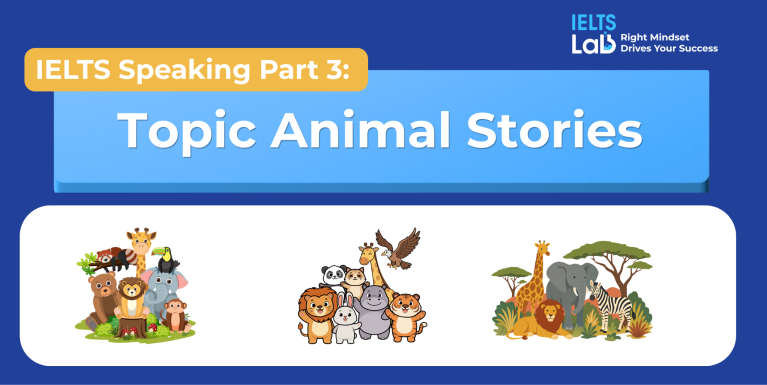
Animal Stories (Những câu chuyện về động vật) là một chủ đề trong IELTS Speaking Part 3, với các câu hỏi liên quan đến vai trò của động vật trong truyện kể, những bài học đạo đức, ảnh hưởng của phim ảnh và nhận thức của con người về quyền lợi động vật.
Để trả lời tốt các câu hỏi thuộc chủ đề này, thí sinh cần biết cách giải thích nguyên nhân, phân tích ảnh hưởng và đưa ra ví dụ cụ thể. Cùng IELTS Lab tham khảo 6 bài mẫu IELTS Speaking Part 3 chủ đề Animal Stories và những từ vựng hữu ích giúp bạn phát triển ý tưởng, trình bày quan điểm và trả lời tự nhiên hơn nhé!
1. Danh sách câu hỏi IELTS Speaking Part 3 – Animal Stories
|
2. Bài mẫu IELTS Speaking Part 3 – Topic Animal Stories
Question 1: Why do children enjoy stories about animals?
Sample Answer (Band 8.0+ tham khảo):
| Bài mẫu |
|---|
| Well, children enjoy animal stories because animals are cute, familiar, and easy to imagine. A talking cat, a brave dog, or a clever rabbit can make a story feel playful and entertaining. For example, children may enjoy a cartoon about animals because the characters are less serious and less intimidating than human adults. Another reason is that animal stories often explain life lessons in a simple way. Through animals, children can learn about kindness, courage, friendship, or greed without feeling that they are being lectured. I think animal stories work so well because they combine imagination, fun, and gentle moral lessons. |
Từ vựng nổi bật:
| Từ vựng | Ý nghĩa |
|---|---|
| cute and familiar | Đáng yêu và quen thuộc |
| easy to imagine | Dễ hình dung |
| playful and entertaining | Vui nhộn và mang tính giải trí |
| less intimidating | Ít gây cảm giác e ngại hơn |
| life lessons | Những bài học cuộc sống |
| kindness | Lòng tốt |
| courage | Lòng dũng cảm |
| greed | Lòng tham |
| be lectured | Bị lên lớp, giáo huấn |
| gentle moral lessons | Những bài học đạo đức nhẹ nhàng |
Question 2: What can people learn from animal stories?
Sample Answer (Band 8.0+ tham khảo):
| Bài mẫu |
|---|
| In my opinion, people can learn many simple but meaningful lessons from animal stories. These stories often show values like loyalty, bravery, patience, or cooperation through characters that are easy to understand. For example, a story about a loyal dog may teach children the importance of friendship and trust. Animal stories can also help people understand human behaviour in a less direct way. A greedy fox or a lazy bear may represent real weaknesses that people have in daily life. That makes animal stories useful because they teach moral values in a memorable and accessible way. |
Từ vựng nổi bật:
| Từ vựng | Ý nghĩa |
|---|---|
| simple but meaningful lessons | Những bài học đơn giản nhưng ý nghĩa |
| loyalty | Lòng trung thành |
| bravery | Sự dũng cảm |
| patience | Sự kiên nhẫn |
| cooperation | Sự hợp tác |
| friendship and trust | Tình bạn và sự tin tưởng |
| human behaviour | Hành vi con người |
| real weaknesses | Những điểm yếu thực tế |
| moral values | Giá trị đạo đức |
| memorable and accessible | Dễ nhớ và dễ tiếp cận |
Question 3: Do films influence how people view animals?
Sample Answer (Band 8.0+ tham khảo):
| Bài mẫu |
|---|
| Absolutely, films can strongly influence how people view animals because they create emotional connections. If a film shows a dog as loyal and intelligent, viewers may become more loving and protective toward dogs in real life. For example, after watching animal rescue films, some children may feel more interested in adopting pets or treating animals kindly. However, films can also create unrealistic ideas. Some movies make wild animals look friendly and harmless, even though they may be dangerous or unsuitable as pets. Films can increase empathy, but they should not replace real knowledge about animal behaviour. |
Từ vựng nổi bật:
| Từ vựng | Ý nghĩa |
|---|---|
| emotional connections | Những kết nối về mặt cảm xúc |
| loyal and intelligent | Trung thành và thông minh |
| loving and protective | Yêu thương và có xu hướng bảo vệ |
| animal rescue films | Phim về cứu hộ động vật |
| adopt pets | Nhận nuôi thú cưng |
| treat animals kindly | Đối xử tử tế với động vật |
| unrealistic ideas | Những quan niệm thiếu thực tế |
| friendly and harmless | Thân thiện và vô hại |
| unsuitable as pets | Không phù hợp để nuôi làm thú cưng |
| increase empathy | Tăng sự đồng cảm |
| animal behaviour | Hành vi của động vật |
Question 4: Why are animals often used in stories?
Sample Answer (Band 8.0+ tham khảo):
| Bài mẫu |
|---|
| Well, animals are often used in stories because they make ideas easier and more enjoyable to understand. Writers can give animals human qualities, such as courage, jealousy, or kindness, without making the story feel too serious. For example, a wise turtle or a proud lion can represent different types of people in a simple and memorable way. Animals also help stories appeal to both children and adults. Children enjoy the cute or funny side, while adults can still understand the deeper message behind the characters. That is why animals are such effective characters: they make lessons feel light-hearted, symbolic, and easy to remember. |
Từ vựng nổi bật:
| Từ vựng | Ý nghĩa |
|---|---|
| easier and more enjoyable to understand | Dễ hiểu và thú vị hơn |
| human qualities | Những phẩm chất của con người |
| courage | Lòng dũng cảm |
| jealousy | Sự ghen tị |
| represent different types of people | Đại diện cho những kiểu người khác nhau |
| simple and memorable | Đơn giản và dễ nhớ |
| appeal to both children and adults | Thu hút cả trẻ em và người lớn |
| the deeper message | Thông điệp sâu sắc hơn |
| effective characters | Những nhân vật có hiệu quả truyền tải cao |
| light-hearted | Nhẹ nhàng, vui vẻ |
| symbolic | Mang tính biểu tượng |
Question 5: Should children learn about animals at school?
Sample Answer (Band 8.0+ tham khảo):
| Bài mẫu |
|---|
| Yes, I think children should learn about animals at school because it helps them understand nature and develop empathy. When children learn how animals live, eat, communicate, and protect themselves, they may become more respectful toward the natural world. For example, lessons about endangered animals can help students understand why hunting and habitat destruction are serious problems. At the same time, learning about animals can make science more interesting. Many children find animals more exciting than abstract theories, so animal-related lessons can spark their curiosity. In my view, teaching children about animals builds both knowledge and compassion. |
Từ vựng nổi bật:
| Từ vựng | Ý nghĩa |
|---|---|
| understand nature | Hiểu về thiên nhiên |
| develop empathy | Phát triển sự đồng cảm |
| respectful toward the natural world | Có thái độ tôn trọng thế giới tự nhiên |
| endangered animals | Động vật có nguy cơ tuyệt chủng |
| hunting | Hoạt động săn bắt |
| habitat destruction | Sự phá hủy môi trường sống |
| abstract theories | Những lý thuyết trừu tượng |
| animal-related lessons | Những bài học liên quan đến động vật |
| spark their curiosity | Khơi dậy sự tò mò |
| knowledge and compassion | Kiến thức và lòng trắc ẩn |
Question 6: Do people care more about animal welfare nowadays?
Sample Answer (Band 8.0+ tham khảo):
| Bài mẫu |
|---|
| In my opinion, many people do care more about animal welfare nowadays because information is easier to access. Videos about abandoned pets, wildlife rescue, and factory farming can make people more aware of animal suffering. For example, many young people now support adoption instead of buying expensive pets from irresponsible breeders. However, caring about animals online does not always lead to real action. Some people may feel sad when they watch a video, but they may not change their habits or support animal protection in practical ways. Awareness has improved, but genuine animal welfare still requires consistent action, not just sympathy. |
Từ vựng nổi bật:
| Từ vựng | Ý nghĩa |
|---|---|
| animal welfare | Phúc lợi động vật |
| information is easier to access | Thông tin dễ tiếp cận hơn |
| abandoned pets | Thú cưng bị bỏ rơi |
| wildlife rescue | Hoạt động cứu hộ động vật hoang dã |
| factory farming | Chăn nuôi công nghiệp |
| animal suffering | Sự đau đớn, khổ sở của động vật |
| support adoption | Ủng hộ việc nhận nuôi |
| irresponsible breeders | Những người nhân giống động vật thiếu trách nhiệm |
| lead to real action | Dẫn đến hành động thực tế |
| practical ways | Những cách thức thiết thực |
| genuine animal welfare | Phúc lợi động vật thực chất |
| consistent action | Hành động nhất quán, liên tục |
| sympathy | Sự thương cảm |
3. Mẹo trả lời IELTS Speaking Part 3 chủ đề Animal Stories
Đối với chủ đề Animal Stories, thí sinh nên tập trung vào việc giải thích vai trò của động vật trong giáo dục và văn hóa, đồng thời phân tích mối quan hệ giữa con người và động vật.
Phát triển câu trả lời bằng cách giải thích nguyên nhân: Khi gặp câu hỏi như Why are animals often used in stories?, bạn có thể giải thích rằng động vật giúp những bài học đạo đức trở nên dễ hiểu và gần gũi hơn.
Sử dụng ví dụ cụ thể: Thí sinh có thể nhắc đến những nhân vật quen thuộc như chú rùa thông thái, con cáo tham lam hoặc chú chó trung thành để minh họa cho ý tưởng.
Phân tích cả mặt tích cực và hạn chế: Với câu hỏi về ảnh hưởng của phim ảnh, bạn có thể trình bày rằng phim giúp tăng sự đồng cảm với động vật nhưng đôi khi cũng tạo ra những quan niệm thiếu thực tế về động vật hoang dã.
Kết nối chủ đề với giáo dục và môi trường: Các vấn đề như bảo vệ động vật, môi trường sống, giáo dục trẻ em và trách nhiệm xã hội đều là những hướng phát triển ý tưởng hữu ích.
Ưu tiên học theo cụm từ: Thay vì chỉ ghi nhớ những từ đơn lẻ như animal, story, nature, hãy luyện sử dụng những cụm tự nhiên như develop empathy, spark curiosity, endangered animals, animal welfare và moral values.
4. Lời kết
Chủ đề Animal Stories trong IELTS Speaking Part 3 không chỉ xoay quanh những câu chuyện về động vật mà còn mở rộng sang giáo dục, đạo đức, phim ảnh và trách nhiệm của con người đối với thiên nhiên.
Hy vọng 6 bài mẫu trên sẽ giúp bạn mở rộng vốn từ, rèn luyện khả năng phát triển ý tưởng và tự tin hơn khi trả lời IELTS Speaking Part 3.
Đừng quên theo dõi IELTS Lab để cập nhật thêm các bài mẫu IELTS Speaking theo chủ đề cùng những phương pháp học tiếng Anh hiệu quả nhé!














Để lại một bình luận
Bạn phải đăng nhập để gửi bình luận.